Salicylic Acid
FOR YOUR SKIN
What is
SALICYLIC ACID?
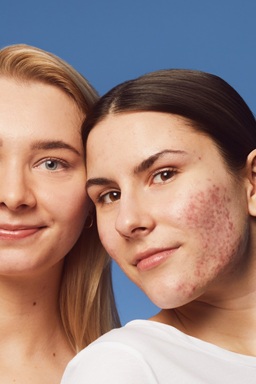
Salicylic Acid is an active skincare ingredient that exfoliates your skin, helps control excess sebum (oil) production, and keeps your pores clear. It's great for blemish‑prone skin and can refine and refresh your skin in as little as 7 days with daily use.
You'll usually find it in cleansers and spot treatment products, but it also pops up in acne‑friendly make‑up and anti‑dandruff shampoo.
Salicylic Acid is available in different concentrations, with each strength designed for a specific purpose. Higher‑concentrated Salicylic Acid is used as a peeling agent, which can reduce the appearance of acne, melasma and dark spots, while lower concentrations are gentle enough for everyday use in cleansers and toners.
If you've clicked on this article, there's a good chance you've wondered: what is Salicylic Acid and what does Salicylic Acid actually do for your skin? This guide walks you through a wide range of Salicylic Acid‑related topics, including how to use Salicylic Acid, whether Salicylic Acid is a BHA, whether Salicylic Acid can make acne look worse before it gets better, and much more.
Read on to explore the benefits of this powerful active ingredient, and find out if adding Salicylic Acid can help boost your own skincare routine.

Is Salicyclic Acid a
BHA?
One of the more common questions you might have seen is: is Salicylic Acid a BHA? Salicylic Acid is indeed a type of Beta Hydroxy Acid (BHA), an organic compound that's commonly used in cosmetics. Even though the name might sound very scientific and synthetic, Salicylic Acid actually occurs naturally in plants such as willow trees, thanks to its natural ability to promote exfoliation and help protect the plant from bacterial infection.
Most skincare products use synthetic Salicylic Acid, but this form is approved by the cosmetics industry and the FDA, and it's celebrated for its blemish‑fighting properties.
Now that you know how to answer if anyone asks: “Is Salicylic Acid a BHA?”, you might be wondering: is Salicylic Acid good for acne and breakouts on your own skin? Keep reading to find out more.
Salicylic Acid
Benefits: Helps protect against acne‑causing bacteria, gently exfoliates your skin, soothes inflammation and helps reduce excess sebum production.
Application: Used to treat symptoms of mild acne, including all types of blackheads and pimples.
Uses: Products with lower concentrations of this active ingredient can easily be added to your daily skincare routine.
Special features: Salicylic Acid is a BHA (beta‑hydroxy acid), an organic compound found in plants such as willow trees.
What is
Salicyclic Acid good for?
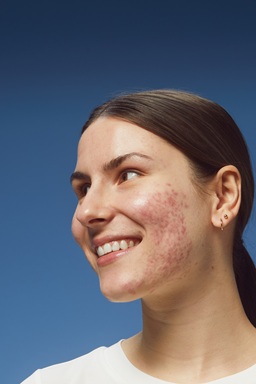
Thanks to its natural exfoliating properties, Salicylic Acid is great for treating symptoms of lighter acne, such as blackheads, whiteheads and pimples. Salicylic Acid penetrates deep into your skin, where it breaks down dead skin cells that would otherwise clog your pores. But what else is Salicylic Acid good for? Here are 5 of the main benefits of Salicylic Acid:
Frequently asked questions about
salicylic acid for the skin:
It's generally fine to use Salicylic Acid as part of your daily skincare routine. Doing this can help keep your skin clarified and refreshed while limiting excess oil production. However, when you start using any new exfoliant or peeling ingredient, it's a good idea to ease into it by limiting use to twice a week for the first few weeks and seeing how your skin feels.

In skincare, purging means an increased rate of skin cell turnover. This process can happen when an active ingredient such as Salicylic Acid comes into contact with your skin, exposing a new layer of skin cells underneath. Along with these new cells, all sorts of other pimple‑causing things are brought to the surface, including excess oil and dead skin cells that would otherwise clog your pores.
As a result, a fresh wave of pimples may appear. However, unlike a bad reaction to a new product – which can cause breakouts in areas of your face where they normally don't appear – purging pimples usually form in the same places you typically break out and tend to fade away faster than normal.
Purging doesn't happen to everyone, but it's completely understandable if you feel worried when it does. You might even find yourself wondering: does Salicylic Acid make acne worse before it gets better? Keep reading to learn more about this topic so you can feel more confident in what your skin is doing.
One of the most common skincare questions is about combining different active ingredients. If you've ever asked yourself “Can I use Salicylic Acid and Niacinamide together?”, the answer is yes – it's absolutely fine to use Salicylic Acid and Niacinamide at the same time.
In fact, these two ingredients really complement each other and can be especially effective if you have oily skin. Salicylic Acid takes care of penetrating deep into your skin to clear excess oil and dead skin cells, while Niacinamide delivers a boost of nourishing hydration and barrier support. Together, they can leave your skin feeling purified, clearer and comfortably moisturised, making them an ideal pairing in your everyday skincare routine.

Although Salicylic Acid works well against acne and the bacteria that cause it, the purging process can initially make acne look a bit worse. This can feel worrying, but it usually shouldn't last longer than about 6 weeks, and it's often worth the wait because your skin should look clearer and brighter afterwards.
If it does last longer than 6 weeks, or you think you might be experiencing a bad reaction instead of purging, stop using the product and chat to a dermatologist or healthcare professional as soon as you can.
Salicyclic Acid
SKINCARE ROUTINE
How you should use Salicylic Acid depends largely on the type of product you're using – higher concentrations are best used sparingly. Others, such as the products in the NIVEA Clear Up range, are specially formulated for daily use. Here's our easy step‑by‑step guide on how to use Salicylic Acid in your routine.
- Cleanse
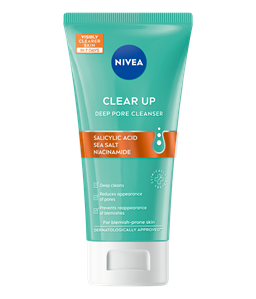
Start by washing your face with a gentle but effective Salicylic Acid cleanser, such as the NIVEA Clear Up Wash Gel. This helps remove make‑up and impurities while deeply cleansing your pores to prevent blemishes from reappearing. Gently massage it onto a wet face, avoiding the sensitive eye area, and then rinse it off thoroughly.
- Tone
After cleansing, gently apply a Salicylic Acid toner. The NIVEA Clear Up Toner is a great option because it helps rebalance your skin's pH level and removes any leftover oil, make‑up or dirt without clogging your pores further. This step also preps your skin nicely for moisturising afterwards.
- Scrub
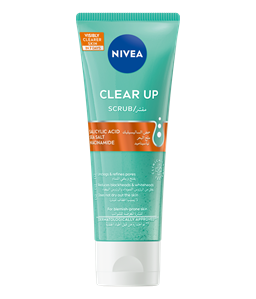
To get an even clearer‑looking complexion, you can swap your cleanser for a Salicylic Acid scrub on 2–3 nights a week. The NIVEA Clear Up Anti‑Blemish Scrub helps unclog pores and refine the skin without drying it out, making it ideal for oily and blemish‑prone skin types. As with the cleanser, simply massage the scrub onto a wet face and rinse away gently.
- Exfoliate
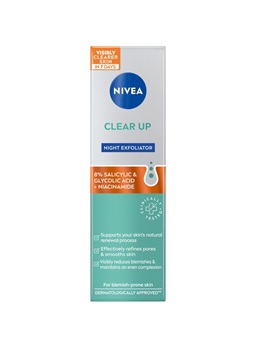
Finish off your daily nighttime routine with a chemical exfoliator, such as the NIVEA Clear Up Chemical Exfoliator. This anti‑bacterial purifying formula combines Salicylic Acid, Niacinamide and Glycolic Acid to support your skin's natural renewal process while helping to reveal visibly clearer skin in as little as 7 days.
Rounding off your
SALICYLIC ACID SKINCARE ROUTINE
The NIVEA Clear Up range can fit into both your morning and night care routines, and like all good routines, it's best to finish off with a nourishing moisturiser that suits your skin.
The NIVEA Mattifying Day Cream is a perfect match, as it intensely moisturises your skin while removing excess oil to leave your face looking refreshed and shine‑free for the day ahead. At night, you can apply the NIVEA Hydra Skin Effect Regeneration Gel Night Cream for up to 72 hours of hydration, leaving your skin feeling supple, smooth and regenerated.
You might notice some very light tingling or stinging when you use Salicylic Acid for the first time, but this is usually normal and expected with active ingredients. That said, whenever you try a new product, it's always smart to ask a professional for advice if you're unsure, and to patch‑test it on a small area of skin before applying a larger amount. And of course, always avoid using Salicylic Acid on already irritated or broken skin.

NIVEA
CLEAR UP RANGE

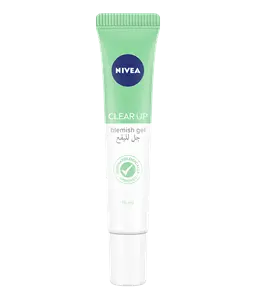
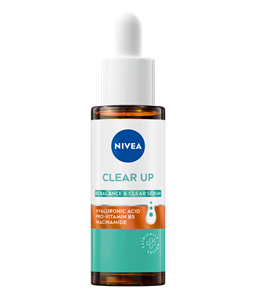
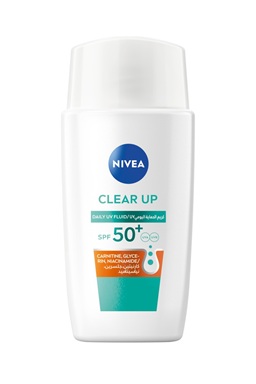
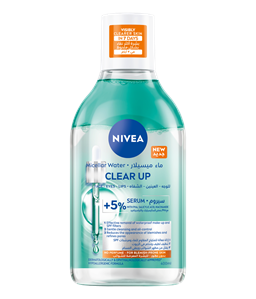
The innovative NIVEA Clear Up range is created with clearer, more refined‑looking skin in mind. It harnesses the clarifying combination of Salicylic Acid and Niacinamide to unclog pores and reduce the appearance of whiteheads and blackheads with regular use. If your skin is prone to blemishes and breakouts, this high‑quality range might be the solution you've been searching for.
As always, chat to a dermatologist or skincare professional before trying any new skincare product, and remember to follow the instructions on the label carefully.
Salicylic Acid
at a glance
Salicylic Acid is an active ingredient in skincare products that exfoliates your skin, helps control excess sebum production and unclogs pores. Ideal for skin that's prone to blemishes, Salicylic Acid can refine and refresh your complexion in as little as 7 days with daily use. Four key benefits of Salicylic Acid are:
- Helps protect against acne‑causing bacteria
- Gently exfoliates the skin
- Soothes inflammation
- Helps control the production of excess sebum