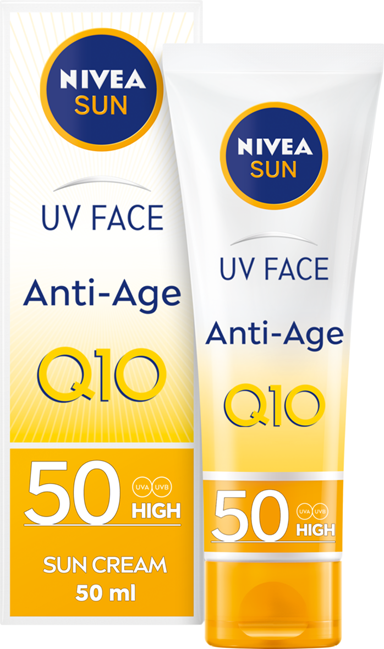
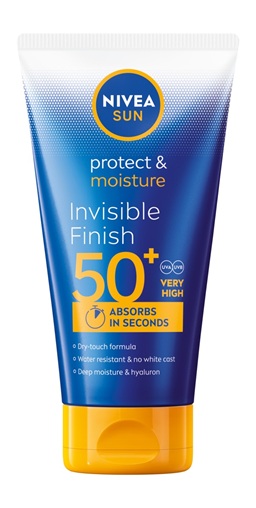
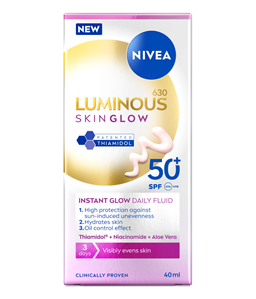
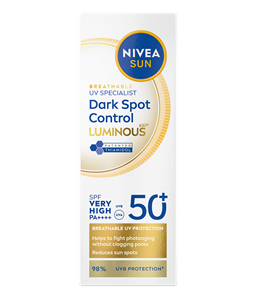
Protect your face with
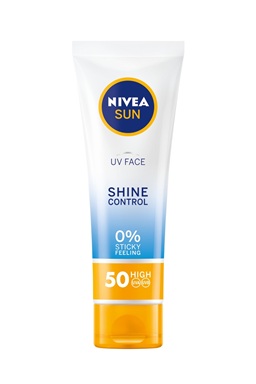
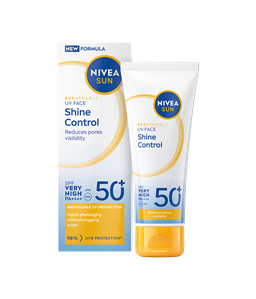
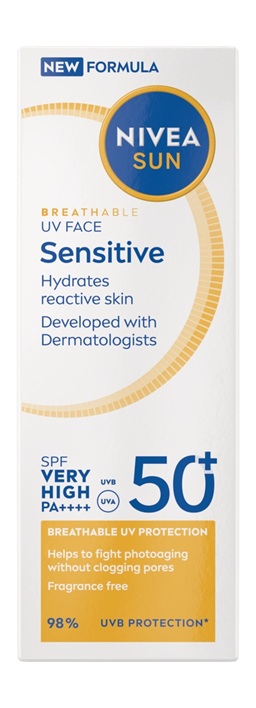
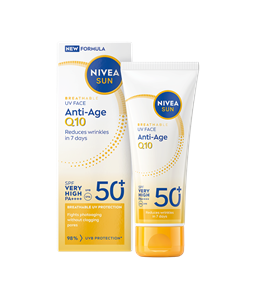
NIVEA Face Sunscreen


NIVEA SUN Face
FAQs
Using sun protection on a daily basis not only helps you prevent short-term issues like sunburn – it also works long-term to help prevent premature skin ageing (wrinkles and fine lines), hyperpigmentation and skin cancer.
UV protection is even recommended when you are not exposed to direct sunlight. Daily application of facial sunscreen helps keep your skin’s elasticity, health, and youthful appearance.
Although a general sunscreen can be used all over your body, it may be thick or oily, making it less suitable for the face’s delicate skin. Over time, this could cause irritation and lead to breakouts if you use it regularly on your face.
For the best results, always opt for sun protection products especially designed for your face, as they’re lighter, far less oily, and more readily absorbed.
When it comes to face sunscreen, there are two types: mineral and synthetic (otherwise known as chemical).
- Mineral sunscreens typically contain zinc oxide and titanium dioxide, which form a barrier that deflects harmful UV rays. However, they wash away more easily than synthetic sunscreens and therefore need topping up more regularly.
- Synthetic sunscreens, on the other hand, absorb and neutralise UV rays by chemically converting them into heat, which is then released by your body. Synthetic sunscreen is more like a lotion, which doesn't leave behind white residue after application.
Regardless of your skin tone, try to look for broad-spectrum face sunscreen, as it protects against both UVA and UVB rays. Opting for an SPF 50 or higher sunscreen for your face will help you reduce the risk of premature skin ageing – and sunburn.
You should reapply face sunscreen every two hours. If you are swimming, sweating, or towel drying, reapply immediately afterwards. Even water-resistant sunscreens can lose their effectiveness over time, so regular reapplication is needed to reinforce protection against UV rays and help defend your skin’s health.
Your skincare routine should always feature facial sunscreen, which you can apply in this order:
- Toner
- Serum
- Moisturiser
- Sunscreen
- Make-up primer or concealer
However, our new NIVEA SUN 2in1 Primer Daily UV Serum SPF 50+ can be applied once after your serum or moisturiser, replacing your sunscreen and make-up primer. It delivers immediate sun protection and instantly smooth skin to simplify your face care and make-up routine.
A sunscreen can maintain its sun protection qualities for about three years. However, you should always check the expiration date on the packaging. The easiest way to tell if the product is no longer effective or has expired is to check whether it has changed in colour, consistency, or smell.