Using sunscreen properly:
how, when & how much to apply
Using sunscreen properly:
how, when & how much to apply
When you're applying sunscreen, the most important thing to think about is skin coverage. You want to make sure any exposed skin has a good, even layer of sunscreen on it. Any skin you leave unprotected will be exposed to UV radiation, which can lead to sun-induced damage and further complications.
So, how do you get the maximum protection from your sunscreen? Let's start with four easy steps on how to properly apply sunscreen.
How to apply
sunscreen

First things first, give your sunscreen bottle a good shake before you use it. This helps to break up any clumping that may happen when the sunscreen has been standing for a while.
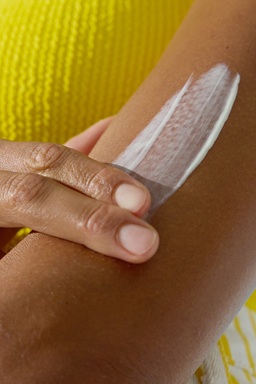
Fully cover all areas of exposed skin and don't forget your ears, neck or the backs of your hands – these spots are often missed. Instead of squirting the sunscreen into your hand all in one go, apply smaller, evenly sized dots directly to your skin to help it spread thoroughly and work more effectively.
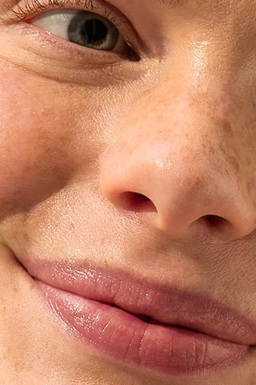
When you're applying sunscreen to your face, gently tap it into your skin rather than rubbing it in, as this helps to avoid irritation and gives you a more even application.
Take extra care when you're applying sunscreen around your eyes. If you can, go for a stick sunscreen in this area, as it'll let you apply a thin layer and minimise the risk of any eye irritation.
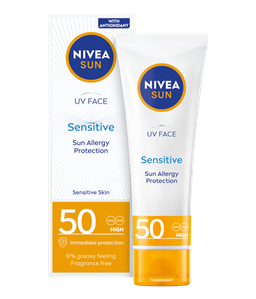
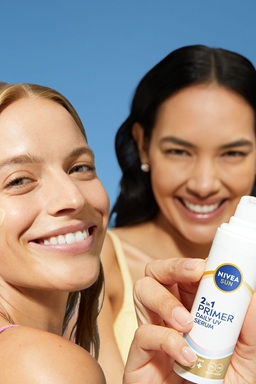
When you're applying sunscreen to your face, choose a face sunscreen specifically. These are formulated to help avoid irritation and are usually lighter in texture, which helps to minimise their appearance on your skin.
How much sunscreen
should you use?
It's recommended that you use around 30 ml – just slightly more than a standard shot glass.
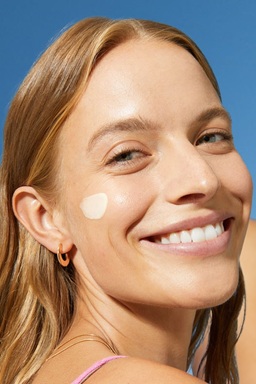
You might also be wondering how much sunscreen to use on your face. A good rule of thumb is to use a squirt of sunscreen about the size of a 1-inch circle and, as mentioned, tap it in instead of spreading it roughly.
Now that you know how much sunscreen to apply, you may be asking yourself when and how often you should be putting it on.

At the very least, you'll want to apply sunscreen every day – even when it's cloudy. That's why it's a good idea to include SPF in your daily skincare routine, for example by using a moisturiser with SPF. By doing this, you get into the habit of putting on a layer of protection every single day.
That said, one application at the start of the day isn't enough – so how often should you reapply sunscreen?
Aim to reapply at least every two hours, and also straight after swimming or after you've been sweating, because both will break down any sunscreen you applied earlier.
It's important to remember that, even if you're good at putting sunscreen on before you go out, most sun damage actually happens later in the day once that first application has weakened – so make sure you keep topping up your sunscreen throughout the day.
Should you apply sunscreen
every day?
You should apply sunscreen every day whenever your skin is exposed to the sun. The sun's harmful UV rays are always around, so to lower the risk of skin damage, always apply sunscreen to any exposed areas of your body.
Putting it on your face is especially important: “Your face is exposed to the sun every day, even if it's cloudy or cold. Therefore, it needs special, reliable protection against UVA and UVB rays,” explains Beiersdorf’s Dr. Göddertz.
Previously, the advice was to apply sunscreen 20–30 minutes before sun exposure to give it time to absorb. These days, most sunscreens work immediately. This can still vary from product to product though, so always follow the instructions on the packaging. What is extremely important, however, is to renew the application at least every two hours.

What goes first,
sunscreen or moisturiser?
“Apply your facial sunscreen after your day care to protect your sensitive facial skin from signs of premature ageing like wrinkles or pigment spots,” advises Beiersdorf’s Dr. Göddertz.
Some advice suggests that the type of UV filter used in your sunscreen should decide whether you apply it before or after your moisturiser. This is not what Beiersdorf's Dr. Göddertz recommends. She suggests that regardless of the UV filters used in the sun product, it should always be applied afterwards.
Why should you apply sunscreen
before makeup?
Because makeup forms a barrier on your skin, sunscreen may struggle to absorb properly if you put it on top, and it might not be as effective. Just like you’d apply your moisturiser before makeup, you want the skin-nourishing ingredients – and your SPF protection – as close to your skin as possible.

When you're applying sunscreen before makeup, let your skin dry for at least 5 minutes first – this helps your sunscreen absorb properly for maximum protection.
Of course, reapplying sunscreen throughout the day (as you should!) can interfere with your makeup. One way around this is to dab a makeup sponge into a small pool of sunscreen and gently press it onto your face.
By dabbing instead of rubbing, you help avoid smudging your makeup. Using a lighter sunscreen formula will also help prevent smudging, but as always, it's best to choose the sunscreen that gives you the highest level of protection.
Yes, you can, although it's best not to use it as a complete replacement. Moisturisers are specifically made to hydrate your skin, whereas this is an added – but not primary – benefit of sunscreen, so your skin might not get all the hydration it needs.
It also depends on whether your sunscreen is formulated for a specific skin type. For example, a sunscreen made for oily skin will usually be lighter, so you should still use a moisturiser as well, otherwise your skin may not be hydrated enough.
How to apply sunscreen
on your own back?
The simplest answer is to ask someone else to apply it for you – but we know that's not always possible. So what do you do then?
Unfortunately, there's no super-easy way to do this with a traditional sunscreen, but here are two potential solutions you can try:
- Using a flannel or cloth, wrap it around a long spoon (or, if you're at the beach, a small shovel!), squeeze some sunscreen onto the fabric and then use it to rub the sunscreen over your back. If you don't have a long spoon or small shovel handy, there's another trick you can try…
- Pull out about a metre of cling film and put five or more dollops of sunscreen in the middle. Hold the cling film at each end and apply it to your back as if you're drying yourself with a towel, rubbing the film where you can to help spread the sunscreen evenly.
Now, we know you probably won't always have a long spoon or cling film with you – especially at the beach. So there has to be an easier option, right?
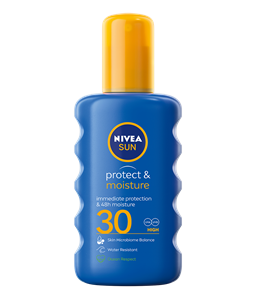
NIVEA offers a range of mist spray sunscreens that are designed to be easy to use. Unlike traditional sun creams, these mists don't need to be rubbed in, because the spray is fine enough to absorb on its own – so all you really need is a reflective surface to check your coverage.
The NIVEA SUN Protect & Dry Touch Refreshing Mist SPF 50 is a great option, as it's 100% transparent, refreshing and water-resistant. We'd still recommend that you reapply after getting wet, just to be safe.

Be sure to spray generously, especially if you can't check your coverage in a mirror or other reflective surface. If you're not sure what “apply liberally” really means, imagine the absolute minimum amount you'd need to cover all exposed skin in a clearly visible layer of sunscreen – then add a bit more.
Should you use sunscreen
everyday?
Because we often have our skin exposed for hours every day, it can easily be damaged by ongoing UV radiation. This may show up as premature ageing, such as dark spots, fine lines and wrinkles.
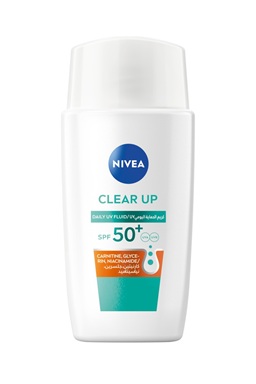
The NIVEA SUN UV Face Specialist Triple Protect Sun Fluid SPF 50+ is an ideal choice. It not only offers SPF 50+ protection, but its ultra-light formula with Hyaluron absorbs straight away. It's also great under makeup, as it's sweat-resistant and helps maintain a smooth, visibly healthy-looking complexion.
If you're still unsure, explore the NIVEA SUN range to find the right level of protection for you.