What is melanin?
What does it do for your skin?
What is melanin?
What does melanin do?
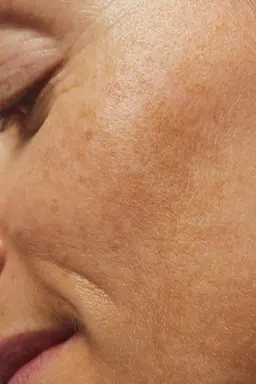
Your skin colour varies based on factors like blood flow, diet and melanin, produced by cells named melanocytes. Although the number of melanocytes is similar among people, the varying melanin production gives different skin shades.
Melanin shields your skin from the sun, and increased production leads to a tan, helping to protect your body against sunburn.
Types of
melanin
Melanocytes create two visible kinds of melanin which differ in terms of their colour tone and location on your body:
- Eumelanin:This comes in black and brown varieties, contributing to the dark tones in your skin, eyes and hair. Eumelanin determines hair colour, with blonde hair resulting from an absence of black eumelanin and a small amount of brown eumelanin.
- Pheomelanin:Responsible for pigments in pinkish areas like your lips and nipples, pheomelanin is predominant in individuals with red hair when combined equally with eumelanin.
Different shades of
melanin in the skin
Where is it
produced?
Melanin is made by melanocytes which are found in the basal layer of the epidermis (top layer of your skin) and in hair follicles. They are also present in different parts of your body, such as:
- Adipose tissue (fat)
- Eye irises
- Specific areas of your brain
- Certain regions of your adrenal gland, found on the top of each kidney
- Your inner ear
How does melanin
protect your skin?

- Defence against UV radiationMelanin, mostly eumelanin, participates in protecting your cells in the outer skin layer, known as the epidermis, from harmful UV light, including UVC, UVB, UVA and blue light. This protection is achieved by absorbing UV light, helping to prevent damage to the sensitive DNA of your skin cells. It should be noted, however, that this protection is not complete, and that sun protection is necessary even if you have dark skin.
- Your skin's natural barrierMelanin also works as a defender against harmful particles called reactive oxygen species (ROS). It acts like an antioxidant, neutralising ROS that are made when UV light damages your skin. Without protective things like antioxidants, these ROS can cause stress and damage your cells.
It’s important to note that these protective effects are mainly linked to eumelanin. Pheomelanin, which is produced in fair‑skinned people, has a much weaker protective effect and may even generate substances that can react with DNA and cause mutations. So don’t forget to apply your sun cream, even if you already have a tan.
Melanin
Melanin types:
Melanin, derived from the amino acid tyrosine, comes in two main types – eumelanin (dark brown) and pheomelanin (red or yellow tint).
Skin defence mechanism:
Melanin acts as a natural defence, absorbing UV light and helping to prevent damage to your skin’s DNA, protecting against UVC, UVB, UVA and blue light.
Consequences of melanin deficiency:
Insufficient melanin is linked to skin disorders (vitiligo, albinism, melasma), an increased risk of vision loss, sun damage, and hearing issues in the inner ear.
Balance melanin levels:
Ways to help balance melanin levels include using adapted sun creams, addressing hyperpigmentation with skincare products, maintaining a balanced diet rich in antioxidants and vitamins A, C and E, and avoiding unsafe practices like tanning beds.
Consequences of
melanin deficiency
- Vitiligo:This condition leads to the loss of skin colour, resulting in white patches. It happens when your immune system destroys melanocytes. While vitiligo can affect anyone, it is usually more noticeable if you have darker skin.
- Albinism:A rare condition characterised by very little melanin, causing pale skin, white hair and blue eyes. People with albinism also face an increased risk of vision loss and sun damage.
- Pigment loss after skin damage:In cases of skin infections, burns or blisters, your body may struggle to replace melanin in the damaged area.
- Hearing loss:A deficiency of melanin in part of the inner ear is linked to hearing loss. People with insufficient melanin have a higher risk of hearing problems.
How to reduce
excess melanin
There are various treatment choices for hyperpigmentation. For instance, applying sunscreen with an SPF of 30 or higher daily can reduce the impact of UV light on your skin and help prevent the appearance of spots.
If you are experiencing high levels of excess melanin, or if you are in any doubt about the nature of your spots (irregular spots, raised spots that change colour), it’s recommended that you chat to your healthcare professional, who will be able to check that it isn’t a more dangerous condition and may recommend specialised topical treatments or specific procedures.
Balancing
melanin levels
A 5‑step skincare routine to help balance excess melanin in the top layers of your skin:
To address concerns related to melanin excess, such as hyperpigmentation or an uneven skin tone, it’s important to tailor your skincare routine accordingly.

Begin by cleansing your skin with a gentle cleanser adapted to your skin type to effectively remove dirt, oil and impurities.
This sets the stage for targeted exfoliation, which is crucial for addressing dark spots and an uneven skin tone. Adding an exfoliant helps to shed dead skin cells and promote cell turnover, and may gradually help to reduce the appearance of dark spots.
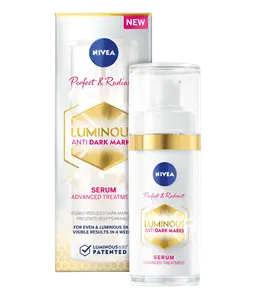
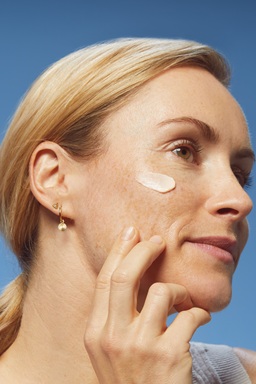
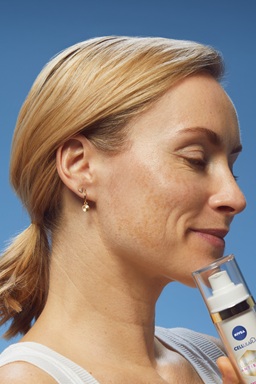
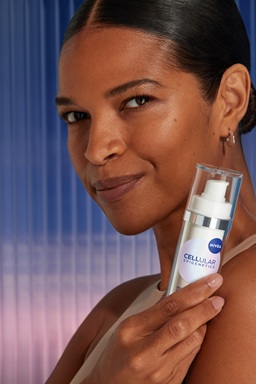
Follow up with a hydrating serum such as the NIVEA Cellular Luminous630 Anti Dark‑Spot Face Treatment Serum, enriched with hyaluronic acid and the patented Luminous ingredient, which works by balancing existing pigmentation to fade spots and help prevent their appearance.
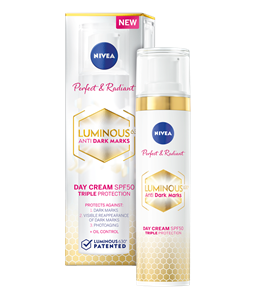
Make sure to apply a moisturiser such as the NIVEA Cellular Luminous630 Anti Dark‑Spot Day Fluid SPF50 that acts at cell level to fade dark spots and prevent their appearance, while protecting your skin from sun‑induced photo‑ageing, for a mattified finish.
For your evening routine, apply the NIVEA Cellular Luminous630 Anti Dark‑Spot Even Tone Night Cream, formulated with hyaluronic acid and the patented Thiamidol ingredient to strengthen your skin at night, while reducing the look of dark spots and hyperpigmentation, with visible results from 4 weeks*.
Warning: use products containing Thiamidol no more than 4 times a day.
*Product use test, 80 women, 5 weeks
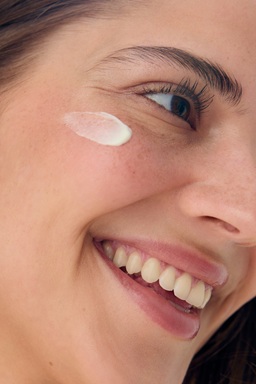
Applying eye cream can help reduce the appearance of dark circles, puffiness and fine lines around your eyes. It gives delicate skin a boost of hydration, improves skin texture and helps you maintain a youthful, radiant look.
The NIVEA Luminous630 Dark Spot Solution Anti Dark‑Circles Eye Cream is formulated with the patented Thiamidol ingredient to help balance the look of pigmentation irregularities and visibly reduce dark circles around your eyes.
You may want to keep in mind that it’s important to reapply SPF protection frequently throughout the day to preserve your skin’s health and radiance.
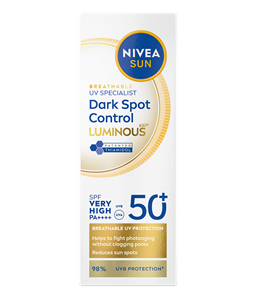
The NIVEA UV Shine Control SPF50 protects your skin immediately against sun exposure and other UV‑induced face skin damage with an instant and long‑lasting mattifying effect.
Sometimes stretch marks may also show melanin excess. If you’re noticing stretch marks on your body, the NIVEA Luminous range offers the NIVEA Anti Stretch Marks Body Serum to even out your skin tone, with the first visible results in 2 weeks*.
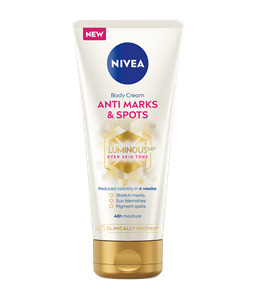
If you prefer a creamier texture, you could use the NIVEA Anti Marks & Spots Body cream instead, providing 48 hours of moisture and reducing the visibility of marks in 4 weeks***.
One application per day on the targeted area is sufficient. Use only one product containing Thiamidol on your body per day.
*Consumer test, 89 participants
**Instrumental test, 33 subjects
***Consumer test, 87 participants
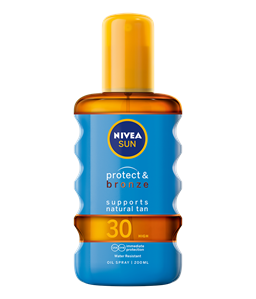
It’s also important to pick the right sunscreen for your skin. The NIVEA Protect & Bronze range makes sure you’re equipped with a sunscreen that provides effective protection against UV rays, with no greasy effect. The products are formulated with tan‑activating oils and pro‑melanin extracts for a beautiful, even tan.
Is it possible to boost or reduce melanin
for a healthy complexion?

Antioxidants seem promising in helping to protect your skin from free radicals, which can be generated after UV exposure. Some micronutrients, as well as flavonoids or polyphenols found in plants you eat, work as powerful antioxidants which can be useful to protect your skin from external influences. Micronutrients could also stimulate melanin production. Some of them might boost melanin, while others could help reduce it.
To get more antioxidants, try eating foods like dark leafy greens, dark berries, dark chocolate and colourful veggies. Taking vitamin and mineral supplements might also be helpful.
On the other hand, in cases of hyperpigmentation, some research has shown that vitamin E applied to the skin can reduce melanin production.
To boost your vitamin E intake, you can either take supplements or add more vitamin‑E‑rich foods to your diet, such as vegetables, grains, seeds and nuts.
Similar to vitamins A and E, vitamin C acts as an antioxidant. It’s essential for maintaining healthy mucous membranes and might have some influence on melanin production and skin protection.
Including vitamin‑C‑rich foods in your diet, like citrus, berries and leafy green vegetables, has beneficial effects on your skin. Applied on your skin, it can also help lighten dark spots by slowing down the activity of an enzyme called tyrosinase. People often use it in skincare to reduce dark spots and even for treating dark spots on the gums.
It’s recommended that you speak to your health practitioner before adding any supplement to your daily diet.
How to get tanned without
increasing melanin?
Although it isn’t safe to increase your melanin production by using tanning beds, you can make your skin look more tanned without exposing yourself to harmful UV rays by using self‑tan products. Sunless tanners don’t increase the melanin in your skin or provide any UV protection, but they leave a pigmented effect on your skin.
This pigment is called melanoidin, which can last a few days and then fade as your skin produces new cells.
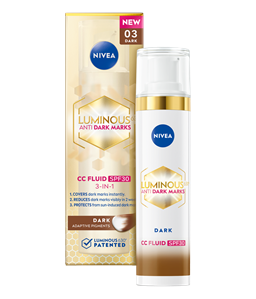
If, however, you want to conceal brown spots on your face caused by the sun while getting a more even tinted effect, you may also want to use the NIVEA Cellular630 Anti Dark‑Spot Tinted Fluid SPF20 which has a dual action: it naturally covers imperfections while reducing dark spots, with visible results in 4 weeks*.
*Clinical evaluation, 48 women, 12 weeks
SUMMARY
That’s why tailoring a skincare routine through cleansing, targeted serums and moisturisers with sun protection is really important.
Additionally, adding antioxidants and vitamins A, C and E to your diet supports skin function and its protection. You’ll also want to avoid harmful practices like tanning beds. Instead, use self‑tanning products, which can help you achieve a radiant complexion without exposing your skin to UV rays.